Phone: 07385701071 | Address: Shop no 1 & 2, S.no. 27/3/6, Cambridge Internatinal School Rd, Punawale,Pune

Cervical Cancer & the HPV Vaccine: What Every Woman Should Know By Dr. Navya, Gynecologist in Punawale
Cervical cancer is one of the most common cancers affecting women, yet it is also one of the most preventable. With regular screening and timely vaccination, we can dramatically reduce the risk. As a gynecologist, I believe awareness is the first step toward prevention.
1/26/20262 min read
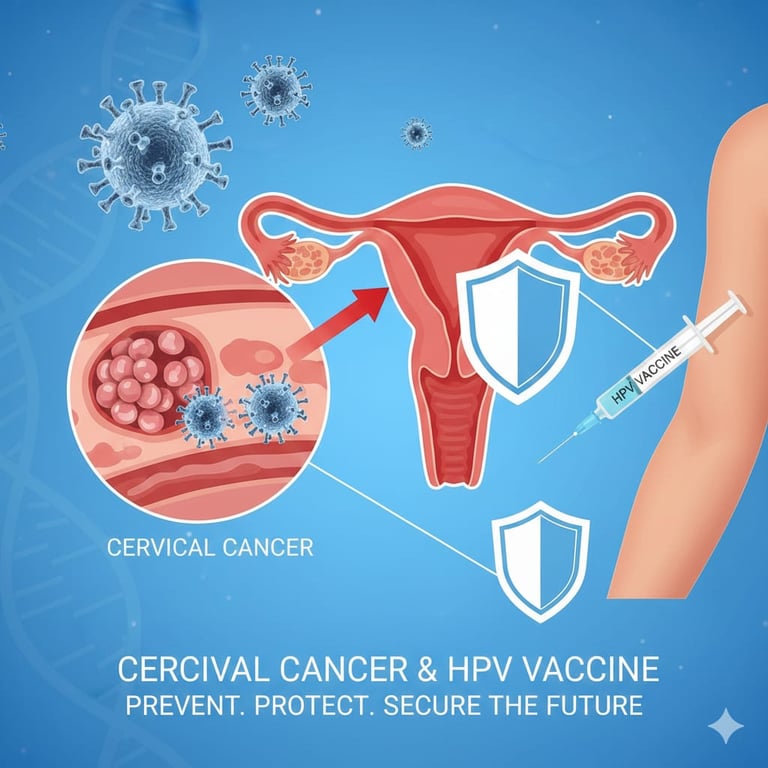
Cervical Cancer & the HPV Vaccine: What Every Woman Should Know
By Dr. Navya, Gynecologist
Cervical cancer is one of the most common cancers affecting women, yet it is also one of the most preventable. With regular screening and timely vaccination, we can dramatically reduce the risk. As a gynecologist, I believe awareness is the first step toward prevention.
What Is Cervical Cancer?
Cervical cancer develops in the cervix—the lower part of the uterus that connects to the vagina. It usually grows slowly over many years, often starting as precancerous changes that can be detected early through screening tests like the Pap smear.
The Role of HPV (Human Papillomavirus)
The majority of cervical cancer cases are caused by HPV, a very common virus spread through skin-to-skin intimate contact.
There are many types of HPV
High-risk types (especially HPV 16 and 18) are responsible for most cervical cancers
HPV infection often has no symptoms, so many women don’t know they are infected
Most HPV infections clear on their own, but persistent infection can lead to cervical cancer if not detected early.
What Is the HPV Vaccine?
The HPV vaccine is a safe and effective way to protect against the most dangerous types of HPV that cause cervical cancer.
Who Should Get the Vaccine?
Girls and boys aged 9–14 years (best time, before exposure)
Young women up to 26 years
In some cases, vaccination may be recommended up to 45 years after medical consultation
Even if you are married or sexually active, the vaccine can still offer protection.
Is the Vaccine Safe?
Yes. The HPV vaccine has been extensively studied worldwide and is proven to be:
Safe
Effective
Well-tolerated
Common side effects are mild, such as pain at the injection site or low-grade fever.
Does Vaccination Replace Screening?
No. Even vaccinated women should continue regular cervical cancer screening because:
The vaccine does not cover all HPV types
Screening helps detect early changes before cancer develops
Importance of Regular Screening
Women should begin Pap smear screening from age 21 or as advised by their gynecologist. Regular screening can:
Detect precancerous changes early
Prevent progression to cancer
Save lives
My Message to Women and Parents
Cervical cancer is largely preventable, and no woman should lose her life to it due to lack of awareness. I strongly encourage:
Parents to consider HPV vaccination for their children
Women to prioritize regular gynecological check-ups
Open conversations about women’s health without fear or stigma
Take Charge of Your Health
Prevention is always better than cure. With HPV vaccination, routine screening, and timely medical guidance, we can move toward a future free from cervical cancer.
If you have questions about the HPV vaccine, screening, or cervical health, consult your gynecologist and make an informed decision.
— Dr. Navya
Gynecologist & Women’s Health Specialist
Contact Us
Phone : 07385701071
Address: Shop no 1 & 2, Survey No. 27/3/6, Cambridge International School Rd, Punawale, Pimpri Chinchwad, Pune- 411033
© 2025. All rights reserved. Vitalink Multispecialty Clinic Punawale