Phone: 07385701071 | Address: Shop no 1 & 2, S.no. 27/3/6, Cambridge Internatinal School Rd, Punawale,Pune
Osteoporosis & Bone Health : The Definitive Indian Guide for Lifelong Strength
Meta Description Osteoporosis is rising sharply in India. This 2025 guide covers early warning signs, DXA scans, treatment options, Indian diet plans, exercises, fracture prevention, and the proven blueprint for rebuilding bone strength at any age.
By Dr. Yogesh D. Narkhede — Orthopedic Surgeon, Vitalink Multispeciality Clinic, Punawale (Pune)
10/31/20255 min read
Osteoporosis in India: The Silent Epidemic No One Talks About
Osteoporosis is no longer just a “women’s problem,” an “old-age issue,” or something that waits for noticeable symptoms.
In India, it has become a silent epidemic — fueled by vitamin D deficiency, low calcium intake, early menopause, sedentary lifestyles, and delayed diagnosis.
Here’s the truth most people refuse to face:
● Your bones start weakening long before you feel pain.
● The first fracture doubles the risk of a second one.
● Most fractures after age 50 are preventable with early screening and the right treatment.
As an orthopedic surgeon, I see this pattern every week — intelligent, capable people who ignored subtle signs and ended up with fractures that permanently changed their mobility.
This guide gives you everything you need to protect, rebuild, and preserve your bone strength in 2025 and beyond — backed by science, tailored for Indian bodies and lifestyles.
What Exactly Is Osteoporosis?
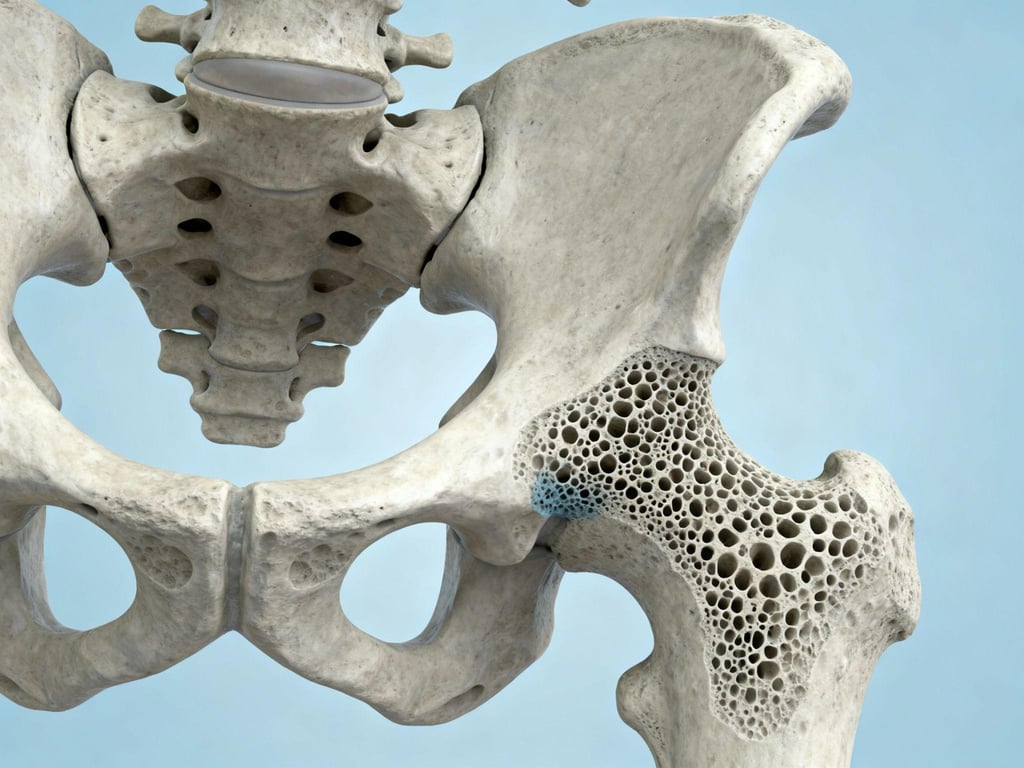
Osteoporosis is a condition where bones become:
● Low in density
● Weak in internal structure
● Easily breakable — even with simple activities
Your bones are constantly remodeled by two types of cells:
● Osteoblasts — build bone
● Osteoclasts — break bone
When breakdown overtakes building, the skeleton becomes fragile.
What accelerates this imbalance in Indians?
● Aging
● Early menopause
● Vitamin D deficiency (affects 70–90% of Indians)
● Low-calcium diet
● Lack of strength training
● Smoking or alcohol
● Long-term steroids or anti-epileptics
Most people discover osteoporosis only after a hip, spine, or wrist fracture.
The REAL Indian Risk: Why We’re More Vulnerable
Compared to global populations, Indians have:
● Lower baseline bone mass
● Widespread vitamin D deficiency despite sunlight
● Low dietary calcium intake (average Indian consumes only 400–500 mg/day vs required 1000–1200 mg)
● Higher rates of early menopause (40–45 years in many women)
● Genetic predisposition to osteopenia
● Sedentary lifestyles and limited strength training
If you're living in India, screening is not optional.
A Patient Story That Mirrors India’s Reality
Mrs. S, 52, from Pune, came to my clinic after a simple slip in the bathroom resulted in a wrist fracture.
She assumed it was “just bad luck.”
DXA scan showed severe osteoporosis, likely present for years.
She had:
● Early menopause at 44
● Chronic vitamin D deficiency
● Minimal exercise
● No calcium intake apart from occasional milk
Her fracture was preventable.
Her story is common.
Your goal is to avoid becoming this story.
Early Warning Signs Indians Commonly Ignore
You should not wait for a fracture to check your bone density.
Red flags include:
● Gradual height loss
● Stooped or hunched back
● Chronic back pain
● Joint stiffness
● Repeated muscle weakness
● Fracture from a trivial fall
● BMI < 19 (thin build)
● Early menopause
● Long-term steroid use
● Family history of osteoporosis
● Chronic thyroid, kidney, or rheumatoid conditions
If you’re 50+ and had even one minor fall fracture:
Assume osteoporosis until proven otherwise.
The 2025 Diagnosis Pathway: How to Detect Osteoporosis Early
1. DXA Scan — The Gold Standard
A DXA (Dual-energy X-ray Absorptiometry) scan measures bone density at the spine and hip.
It’s fast, painless, and highly accurate.
Who needs a DXA scan?
● Women 65+
● Men 70+
● Adults 50+ with any risk factor
● Anyone with a low-trauma fracture
● Long-term steroid users
● Women with early menopause
If you’re above 50 and haven’t had a DXA scan yet, you’re playing with fire.
2. Fracture Risk Calculators
Tools like FRAX estimate 10-year fracture risk.
However, in Indians, FRAX often underestimates risk due to:
● Vitamin D deficiency
● Low BMI
● Genetic factors
So FRAX is useful but not final.
3. New Technologies in 2025
Modern tools now detect early bone weakness even before major density changes:
● AI-enhanced X-rays that detect microarchitectural loss
● Trabecular Bone Score (TBS) for improved fracture prediction
● QCT scans for detailed volumetric bone density
These offer deeper insights when DXA results are borderline.
How to Strengthen Bones in 2025: The Complete Blueprint
1. Nutrition: Your Daily Bone-Building Foundation
Daily Requirements (Indians 2025)
● Calcium:
○ Adults: 1000 mg/day
○ Postmenopausal women & men 70+: 1200 mg/day
● Vitamin D: 800–1000 IU/day
● Protein: 1–1.2 g/kg/day
Top Indian Food Sources
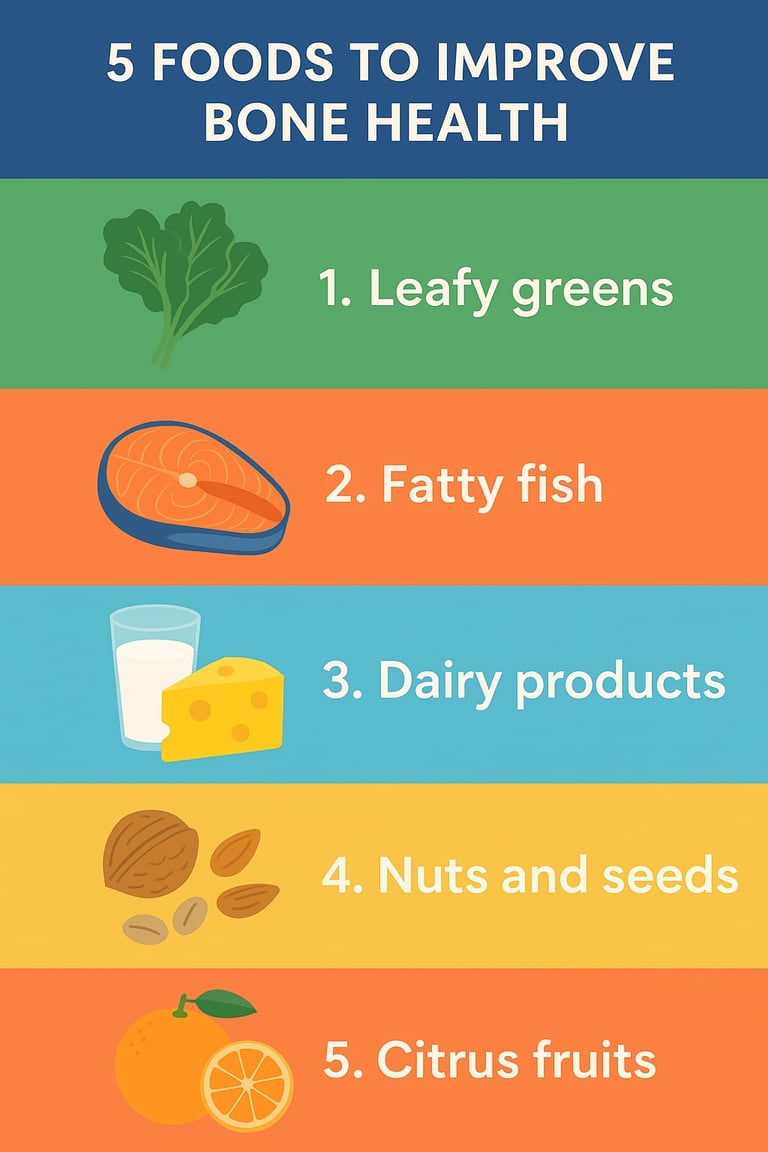
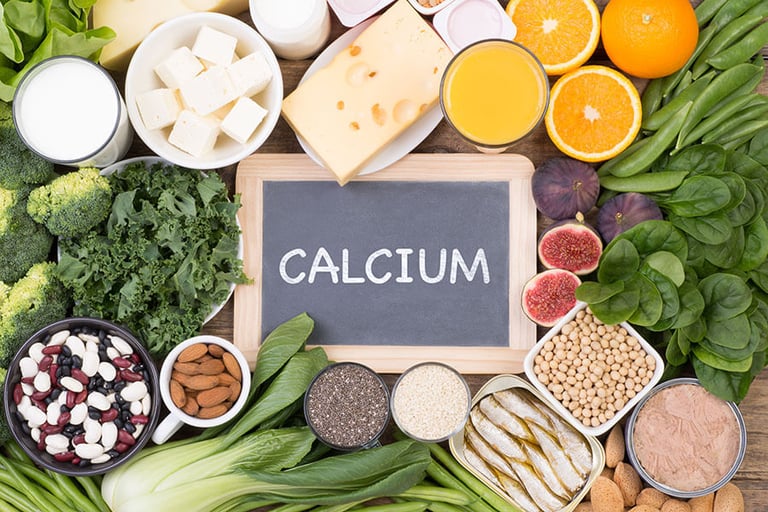
Calcium-Rich Foods
● Milk, curd, paneer
● Ragi
● Sesame seeds (til)
● Almonds
● Green leafy vegetables
Fish: sardines, salmon
Vitamin D-Rich Foods
● Egg yolks
● Fish
● Fortified milk
● Correct sunlight exposure (see below)
**Most Indians cannot meet requirements with diet alone.
Calcium + Vitamin D supplementation is often necessary.**
2. A 7-Day Anti-Osteoporosis Diet Plan (Indian)
Balanced for vegetarians and non-vegetarians.
Day 1
● Breakfast: Ragi dosa + curd
● Lunch: Dal, rice, spinach sabzi
● Snacks: Almonds + fruit
● Dinner: Grilled paneer + vegetables
Day 2
● Breakfast: Oats + milk
● Lunch: Fish curry + rice
● Snacks: Chia seed pudding
● Dinner: Mixed veg khichdi
Day 3
● Breakfast: Besan chilla + curd
● Lunch: Rajma chawal
● Snacks: Sesame laddoo
● Dinner: Dal + roti + sabzi
Day 4
● Breakfast: Idli + sambar
● Lunch: Chicken curry + rice
● Snacks: Fruit bowl
● Dinner: Vegetable pulao + curd
Day 5
● Breakfast: Sprouts + buttermilk
● Lunch: Palak paneer + roti
● Snacks: Handful of walnuts
● Dinner: Dosa + chutney
Day 6
● Breakfast: Eggs (2) + toast
● Lunch: Soya chunks curry + rice
● Snacks: Til chikki
● Dinner: Chapati + dal + sabzi
Day 7
● Breakfast: Upma + milk
● Lunch: Fish fry + dal + rice
● Snacks: Curd
● Dinner: Khichdi + ghee
3. Exercise: The Non-Negotiable Stimulus for Bone Growth
Bones respond ONLY to load.
If you don’t stress them, you lose them.
The Most Effective Bone-Strengthening Exercises
● Brisk walking
● Stair climbing
● Squats
● Lunges
● Planks
● Resistance training (weights)
Yoga

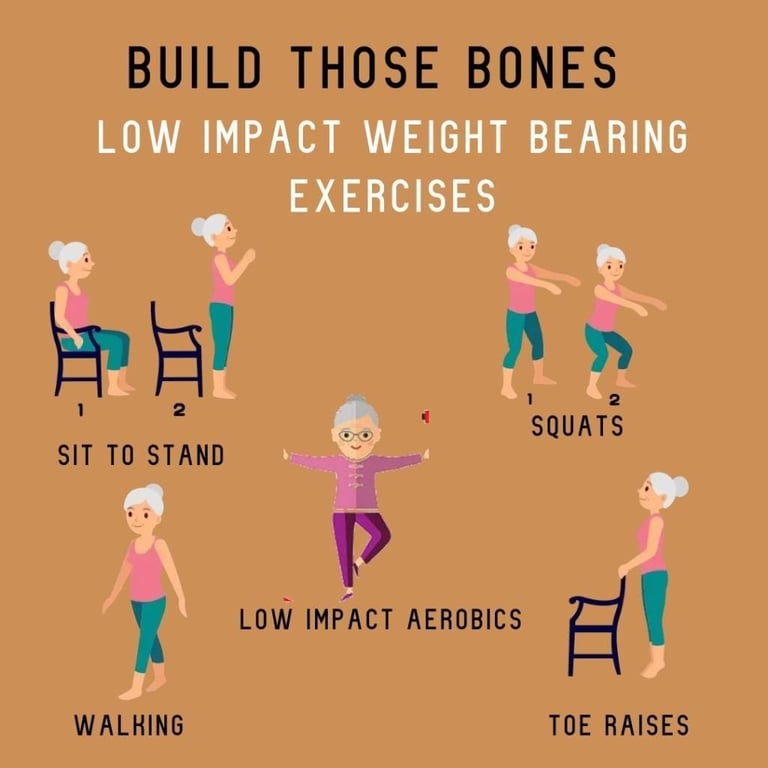
● Tai chi for balance
Weekly Exercise Blueprint (2025)
Day
Workout
Mon
40-min brisk walk + squats & lunges
Tue
Upper body resistance + core
Wed
Yoga / Pilates
Thu
40-min walk + lower body strength
Fri
Weight training
Sat
Balance training + stretching
Sun
Rest
Consistency > intensity.
4. Lifestyle Habits That Dramatically Improve Bone Health
● Quit smoking
● Reduce alcohol
● Maintain healthy weight
● Get 15–20 min sunlight (10–11 AM or 4–5 PM)
● Improve home safety (fall prevention)
Fall-Proofing Checklist for Seniors
● Remove loose rugs
● Install grab bars in bathroom
● Use anti-slip mats
● Ensure bright lighting
● Wear non-slip footwear
● Keep floor clutter-free
● Install night-lights
● Avoid walking in socks on tiles
Falls are the #1 cause of fractures in seniors.
Treatment Options in 2025: What Actually Works
First-Line Therapies
● Bisphosphonates: alendronate, risedronate, zoledronate
● Calcium + Vitamin D supplementation
● Lifestyle modification (diet + exercise)
Advanced Therapies
● Denosumab (Prolia) — 6-monthly injection
● Teriparatide — daily injection, stimulates bone formation
● Romosozumab — newest treatment, powerful bone-builder
● SERMs (Raloxifene) for select women
Emerging 2025 Therapies
● Wnt signaling pathway drugs
● GPR133 modulation agents
● AI-personalized dosing algorithms
Never start medication without medical supervision.
Can Osteoporosis Be Reversed? The Honest 2025 Answer
Yes — partially and realistically, depending on stage.
Reversal is possible when:
● Correct medication is used
● Strength training is consistent
● Vitamin D & calcium levels normalized
● Lifestyle risks eliminated
Waiting for multiple fractures makes recovery slow and incomplete.
When to See a Doctor Immediately
● Fracture from a simple fall
● Sudden or severe back pain
● Height loss
● Stooped posture
● Early menopause
● Chronic vitamin D deficiency
● Long-term steroid use
● Family history of osteoporosis
If you’re over 50 and haven’t had a DXA scan, you’re gambling with your mobility.
Book your bone density test at Vitalink Multispeciality Clinic, Punawale today.
Vitalink Multispeciality Clinic — Punawale, Pune
Orthopedics • Dental • Medicine
DXA Scan Referral • Full Bone Health Evaluation
Call: +91 —
Location: Near —
FAQ 1. What is the best test for osteoporosis?
DXA scan of hip and spine is the gold standard.
2. What is normal vitamin D level?
30–50 ng/mL is optimal.
3. Can osteoporosis be cured?
It can be improved significantly, especially if treated early.
4. At what age should Indians get a bone test?
Women: 50+
Men: 55–60
Anyone with risk factors: immediately.
5. What foods strengthen bones fastest?
Milk, curd, ragi, paneer, sesame seeds, almonds, spinach, and fish.
Contact Us
Phone : 07385701071
Address: Shop no 1 & 2, Survey No. 27/3/6, Cambridge International School Rd, Punawale, Pimpri Chinchwad, Pune- 411033
© 2025. All rights reserved. Vitalink Multispecialty Clinic Punawale